• Hey There, Dreamers and Doers! Welcome to My World!

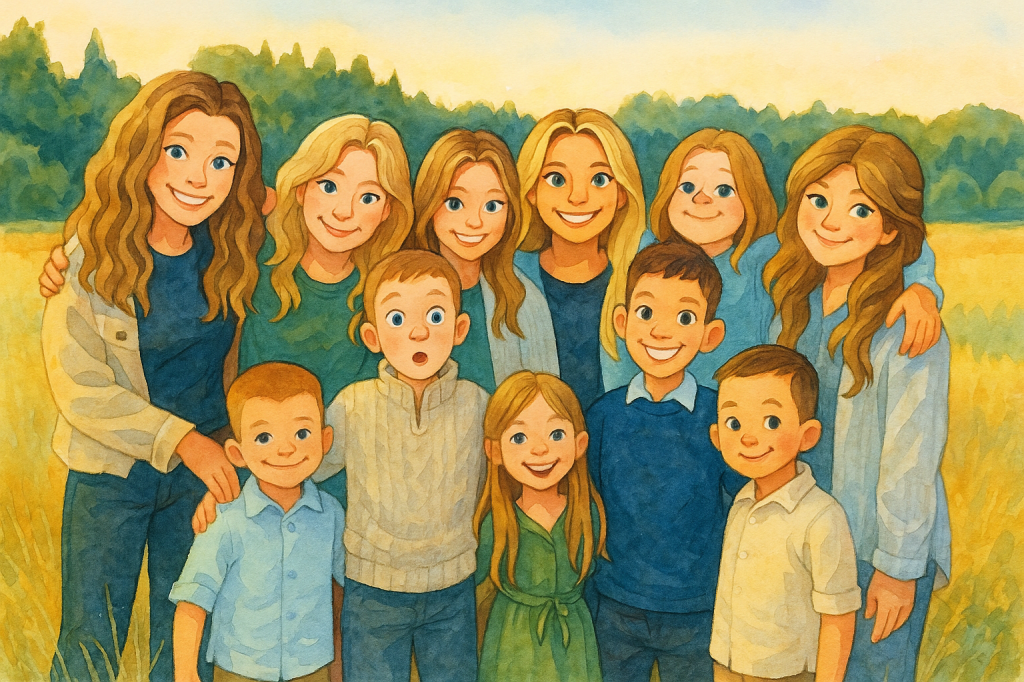
    Welcome! I’m Marissa Lauren—mom of ten, entrepreneur, farm girl at heart, and passionate cheerleader for dreamers.

    I believe every one of us was born to create, to grow, and to boldly step into our purpose—no matter what life throws our way. This blog is my heart on a page: a space to share my story, inspire you, and remind you that practice doesn’t make perfect; practice makes better.

    So grab a coffee (or a glass of wine—no judgment!) and come with me on a journey of hope, faith, and a little farm-girl grit.


    I grew up homeschooled in rural Wisconsin, surrounded by wide-open fields and the rhythm of country life. At 19, newly married and full of ambition, I dove headfirst into my own homestead dream: goats, chickens, elderberries, and handmade everything.

    I sewed clothes for my kids, crafted organic soaps and candles, studied health and naturopathy for over a decade, and launched Seven Sisters Clothing—designing kids’ apparel that was manufactured overseas and sold on Amazon.

    Over the past 15 years, I’ve helped launch more than two dozen businesses, walking alongside dreamers and turning raw ideas into structured, purpose-driven realities.


    Then everything changed.

    In 2018, I was blindsided—in the middle of the night—and my entire world collapsed.

    I lost every title I held dear: homeschool mom, wife, stay-at-home mom. Suddenly, I was feeding my ten kids Fruit Loops from a food pantry, paralyzed by guilt over sugar and artificial colors. I had poured everything into building a life, and in a flash, it was gone.

    But that painful season taught me something that years of success never could: my identity isn’t in what I do—it’s in who I am. That loss refined me, and through God’s goodness, I discovered that hope and purpose can rise from ashes.

    By March 2020, my kids and I had started fresh in Vancouver, Washington—with less stuff, but more heart. We carried a deeper love for humanity, a stronger faith, and a renewed passion to serve.


    This blog isn’t just about motherhood and rebuilding—it’s also where I share my heart for business.

    Here, I’ll be transparent, vulnerable, and real about what I’m learning in the business world: lessons from leadership, failure, growth, and staying ethical in a culture obsessed with shortcuts and self-gain.

    I believe business should be a force for good.
    I believe storytelling has the power to connect, convict, and catalyze change.
    And I believe profit and purpose were always meant to go hand in hand.


    This space is for:

    • Moms juggling a million things
    • Women rebuilding after loss
    • Parents eager to unlock their kids’ potential
    • Entrepreneurs who lead with heart
    • Anyone who’s still daring to dream—even after the storm

    You’ll find personal storiesmindset shiftsbusiness wisdom, the raw truth of raising ten kids, and plenty of humor—because if I can survive a goat in my kitchen, we can laugh through anything together.


    My hope?
    That you leave each post feeling inspiredseen, and ready to create.

    Let’s ditch adversity for collaboration, perfectionism for progress, and build lives—and businesses—rooted in authenticity, strength, and God’s goodness.

    Wherever you’re at, I’m here to cheer you on.

    Let’s do this.together.

  • Sixteen Blocks, Seven Churches.

    I may have a very unpopular opinion.
    A very strong, unpopular opinion.

    I see the signs that say “Jesus Saves.” Recently I came across a flyer inviting people to a local tent revival. It read: Preaching. Singing. Jesus Saves.

    And I need to tell you why that flyer broke something open in me.

    Let me be clear about where I stand first. I love people. I love Jesus. I love God. I love what He did and who He is.

    This isn’t coming from someone who has walked away. It’s coming from someone who can’t look away.

    The people nobody asked about

    When I meet people, I get to know them. My business partner is gifted at asking people about their story, and I get to sit and listen.

    And here is what I’ve learned, over and over, almost without exception:

    Nearly every person I meet who is in trouble was abandoned, or abused, or both, in childhood.

    It is staggering how many people are walking around, functioning, carrying massive childhood trauma and neglect that no one ever stopped to see.

    The man who crossed the border from Mexico alone at ten years old because his mother died, and went straight into a system that arrested him, bounced him through foster homes, and abused him along the way.

    The kid living on the streets at eleven because his parents were strung out, until prison became the first stability he’d ever known.

    The little girl whose brother began raping her when she was six years old. She couldn’t defend herself. So she grew up believing her only value was her body, and now she sells it to survive.

    These are not statistics to me. These are people I have sat across from.

    And every one of their stories has the same missing character: someone who stopped.

    The man who walked past seven churches

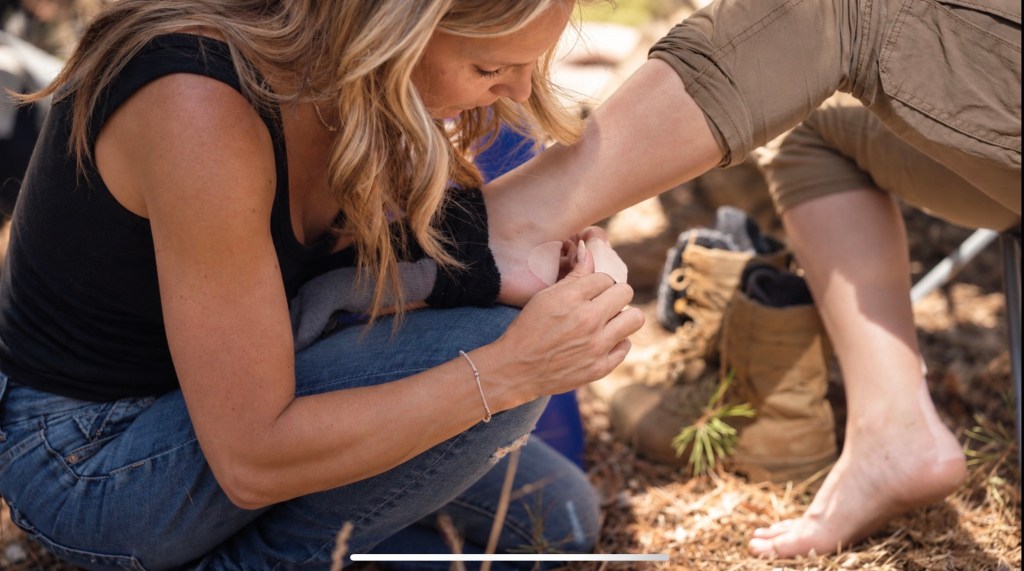
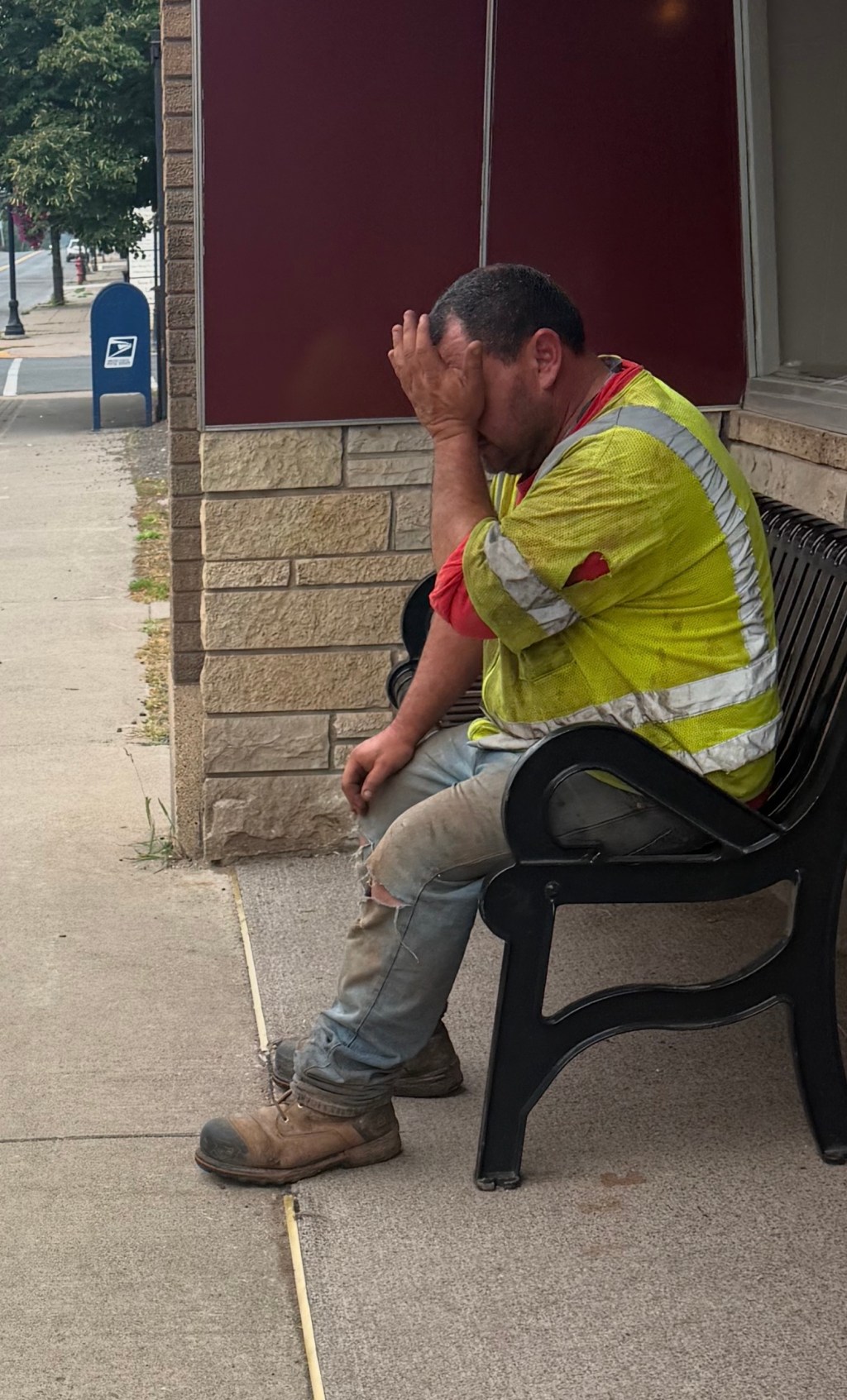
    This morning, this very Sunday morning, I was drinking my coffee at a local shop when a 45-year-old man stumbled in.

    Battered. Bruised. Blood dripping from his face, down his neck, onto his hands.

    He was 45 now, but he was once that ten-year-old who fled Mexico alone. Thirty-five years with no direction. No purpose. No mentor. No one who stopped.

    He told me someone had beaten him and stolen his truck sometime between two and three in the morning. He’d been lying in a ditch until he woke up and started walking. It was 9:20 this morning.

    I asked which direction he’d come from. I knew that street. I counted the blocks.

    He walked sixteen blocks.
    He passed seven churches.
    Nobody stopped.

    Every one of those churches was right around service time. Guaranteed, their parking lots were full.

    Nobody stopped to see what was wrong. No one stopped to help a battered, bleeding man walking down the main street of our town.

    Why? Because we have our church khakis on. Our braided hair. Our little girls in their dresses. He’s not our problem.

    But we’ll invite him to church. We’ll preach at him. We’ll count his confession and his conversion.

    How dare we.

    Love is not preaching

    How dare we preach at someone if we’re not willing to pull them out of the trenches?

    If all we want to do is hand them a flyer, that is not the church Jesus created. It’s not the church He called into being.

    He told us to love. It is His highest commandment, repeated over and over.

    Love is not preaching. Very, very rarely is love preaching.

    Remember His words: people will come to Him saying, “We did signs and wonders in your name” and He will answer, “I never knew you.” And to others: “I was hungry and you fed me. I was thirsty and you gave me a drink.”

    He was in the man with the empty cup that we passed by.

    I love humanity. But I carry a real hurt, a real pain, over those of us who now represent Jesus. I know there are people who do good and love sincerely. I see you, and I honor you.

    But as a whole? Those of us who claim to love Jesus are failing. We are failing as representatives of who He is and why He came.

    Here is the hard truth: I was just as clueless about what the love of God looks like as someone who never knew Him. And I believe most of the church still is.

    If we actually understood what He did for us, we would serve people in a way that looks like love, not preaching at them.

    And here is the part that will sting: if we don’t see ourselves as one of them, if we believe we’ve somehow arrived higher and have something to tell them that they don’t know, then we have no business talking to them at all.

    Get on your hands and knees. Love and serve humanity as an equal. And from that position, share. Share what God has done for you. Share who He is.

    But only if you love them first.

    “All they need is Jesus”

    We look at person after person in a miserable state and we say, “All they need is Jesus.”

    That’s correct. But that Jesus lives in you. He lives in me.

    And we’re not willing to sacrifice our comforts. Our Sunday mornings. Our Instagram pictures. Our coffees.

    When I share this, I often hear: “That’s not my gift,” or “So am I supposed to feed every homeless person on earth?”

    That is a straw man: taking an exaggerated version of what I’m saying and attacking that instead. Don’t do that this time.

    I am not saying every person must help everybody. I am saying we are commanded, commanded, to love the least of these. To care for widows and orphans. To feed the hungry. To clothe the naked. To give a cup of cold water to the thirsty.

    We are required by heaven to be uncomfortable and to sacrifice for each other. And it doesn’t matter what they do with it afterward. We’re commanded to do it and leave the rest to the Lord.

    “But I have to serve my family first.” Do you? Serve them so they can have nicer clothes and a bigger house?

    Serving your family is teaching them how to love humanity. Teaching them discipline, sacrifice, and how to lead. How else will they learn it?

    I am embarrassed by some of what I’ve seen represent God. I’ve seen a pregnant homeless woman barred from entering a church on a Sunday morning. I’ve seen a single mom baptized by a church while she slept on a concrete floor, and that same church wasn’t willing to help her get so much as a mattress, or fix her car so she could get to a job.

    That is not honoring God. Throwing ourselves on the altar on Sunday morning while refusing to love people is mockery. It is taking the Lord’s name in vain.

    They don’t need another sermon. They don’t need another song.

    They need love that looks like something real.

    What if someone had stopped?

    I’m not saying I’m perfect or that I’ve arrived. But I can’t stop asking: what if someone had loved that little boy crossing the border thirty-five years ago? Or the sixteen-year-old kicked out of his house? Or the strung-out mom and her abandoned kid?

    We cannot assign all the pain in this world to the devil. Some of it is us.

    We are responsible for our neighbors, our community, our kids, our cousins, our nieces and nephews, and the people we pass in the grocery store. They are our responsibility because God said they are.

    He commanded us far more times to live love than to preach it.

    So here’s my challenge

    Sit with these questions before you answer them:

    When was the last time you stopped?

    Not donated. Not invited. Stopped for a person right in front of you.

    Who is the bleeding man on your sixteen blocks?

    There is one. There always is.

    And this week, do one uncomfortable thing for one person who can do nothing for you in return. Don’t announce it. Don’t post it. Just stop.

    Because Jesus saves. That’s true.

    But the Jesus they need is the one who lives in you.
  • Screenshot

    When concern causes division, it isn’t love. It’s the thing God calls detestable.

    We love to blame the devil. It’s easier that way. Poor guy takes the fall for a lot of things that are actually just us, being petty, being scared, being human.

    I want to talk about one of those things today. Gently, but honestly. Because I think it’s time somebody took the mask off.

    Six Things, and a Seventh

    There’s a well known passage that lists six things God hates, and then adds a seventh, almost like it needed its own category of detestable. That seventh one is a person who sows discord among brothers.

    Not murder. Not lying, not pride, not even the other six. Sowing discord gets its own line. Its own weight. And I think that’s because it’s so sneaky. So easy to do without ever raising your voice or throwing a punch. You can sow discord with a raised eyebrow. With a “well, I probably shouldn’t say this, but…” With a group text that doesn’t include one person.

    What Discord Actually Looks Like

    I’m not talking about disagreement. Disagreement is healthy. I’m talking about the quiet, cumulative behaviors that pull people apart from each other, often while looking like concern, loyalty, or even love.

    Things like:

    • Talking about someone instead of to them
    • Creating suspicion where there wasn’t any
    • Backtracking or softening your words once you’re caught, instead of owning them
    • Mocking someone, even “affectionately,” in front of others
    • Making a person feel guilty for having a relationship with someone else
    • Shaming someone privately or publicly, even inside a family or friend group
    • Building alliances against a person, so it’s you and me against them
    • Turning the group into a tribe, where belonging depends on picking the right side
    • Outcasting someone for who they choose to associate with, or not associate with
    • Jumping to conclusions before ever asking a direct question

    That last pattern deserves its own moment. When we punish people for their relationships, when someone becomes suspect just because they still talk to the person we’ve decided is the problem, we’ve stopped being a family or a friend group and started being a tribe. And tribes don’t ask questions. They just ask whose side you’re on. Nobody should have to forfeit a relationship to keep their place in the circle.

    Every one of these feels justified in the moment. That’s what makes it so dangerous. It rarely feels like sin while you’re doing it. It feels like protecting someone, or being real, or just venting. Sometimes it even wears spiritual clothing. We call it discernment. We call it concern. We say “I’m just worried about them.” But if the fruit of my “discernment” is that two people trust each other less, that wasn’t discernment. That was judgment in a nicer outfit.

    Real discernment leads me to pray, to go directly, to seek understanding. Judgment just needs an audience.

    And here’s what I’ve noticed, watching this up close more times than I’d like: it almost always starts with hurt. Somebody got wounded, and instead of taking that wound somewhere it could heal, they dressed it up as love. Suspicion in the disguise of love is still suspicion. Concern that quietly recruits people to a side isn’t concern. I say that with compassion, because hurt people rarely realize that’s what they’re doing. But naming it matters, because unhealed hurt doesn’t just stay in one heart. It travels. It divides. And the person spreading it often believes, sincerely, that they’re helping. But look at what it produces. Not clarity. Not closeness. Division.

    The Better Way Is Right There

    If someone has an issue with someone else, the instruction is remarkably simple: go to them directly. Not around them. Not to everyone but them. Directly. And if that doesn’t resolve it, then you bring in wise counsel, one or two others, not to build a case, but to help find reconciliation.

    That is so different from how most of us actually operate. It’s so much easier to find a common enemy. There’s something about talking about the friend who isn’t in the room, about triangulating a conversation so you have an ally instead of a hard conversation, that feels good in the moment. It bonds people fast. But it’s a false bond. It’s built on someone else’s back.

    The Question I Keep Asking Myself

    I’m not writing this from a place of having it all figured out. I’m writing it from a mom’s heart, because I have watched families, friend groups, and teams fracture over exactly this. And I’ve had to ask myself the hard question more than once.

    Here it is, and I think it’s worth sitting with:

      Is what I’m about to say going to bring understanding, or is it going to cause division?

      Does it protect this person’s autonomy and their right to choose their own relationships, or does it quietly strip that away?

      Is it building someone up, even in their absence, or is it tearing them down when they can’t speak for themselves?

    That’s it. That’s the whole test. It doesn’t require a theology degree. It just requires honesty.

    This Isn’t About Being Harsh

    I don’t want to hand out condemnation here. I want to hand out a mirror, and then a hug. We all do this. I’ve done this. It sneaks in disguised as concern, as humor, as just processing out loud. There’s no shame in recognizing yourself in this. Recognizing it is actually the beginning of something beautiful.

    Because here’s the good news: if we have the power to sow discord, we have just as much power to sow peace. The same mouth that can create suspicion can create safety. The same conversation that could divide two people can be the one that brings them back together. You can be the person in your family or your friend group who refuses to pass along the suspicion, who says “have you talked to them directly?”, who protects people when they’re not in the room.

    That’s not a small thing. That’s holy work, and it’s available to every single one of us, starting with the very next conversation we have.

    So next time you feel that pull, that little rush of bonding over someone who isn’t there, pause and ask the question. It might just save a relationship you didn’t even realize was on the line. And you might just become the peacemaker your people didn’t know they needed.

    Written with love, from someone still learning too.

  • There’s a version of someone that people write off way too fast. The one sleeping in late, bouncing between jobs, inconsistent, distracted, no direction. It’s easy to label them. Lazy. Unreliable. Not leadership material. But that’s not actually what’s going on. Most people are not broken, they’re unstructured.

    People don’t just rise into discipline or leadership because they feel like it. They rise when their environment requires it. Right now, a lot of people are living in environments that require almost nothing from them. No real expectations, no accountability, no pressure to grow, no real consequences for staying the same. So they stay the same. Or they drift. And after enough time, that drift turns into identity. They start believing things like “I’m just not disciplined” or “I’m not a leader” or “I can’t stay consistent.” That’s not truth, that’s repetition.

    Real change doesn’t come from motivation. It comes from structure, accountability, and an identity shift working together.

    Structure is what most people are missing. It’s the container that forces movement. Without it, people default to comfort every single time. With it, they don’t have that option. Early mornings, clear expectations, defined roles, time pressure. Structure doesn’t ask someone how they feel, it moves them anyway. And over time, that movement starts to build something.

    Accountability is what closes the gap between what someone says they want and how they actually live. Most people have good intentions. Very few follow through consistently without someone holding the line. Not in a harsh way, but in a steady, consistent way. Someone who sees them clearly, calls them higher, and doesn’t let them quietly fall back into old patterns. That consistency matters more than motivation ever will.

    Then there’s identity. This is where everything locks in. At some point, it stops being “I’m trying to be disciplined” and becomes “I am disciplined.” That shift doesn’t happen because someone says it out loud. It happens because they’ve lived it enough times to believe it. They’ve done hard things, pushed past limits, faced their own excuses, and proved something to themselves. The brain starts updating the story. And once that story changes, everything else follows.

    I’ve seen this play out over and over again. Young people coming in with no direction, no consistency, no belief in themselves. Some of them drifting, some of them struggling, some already written off by the people around them. And then you put them in a different environment. Not an easy one, a structured one. You hold them accountable. You push them past the point where their old identity can survive. And something shifts. Not overnight, but clearly. Confidence starts showing up without being forced. Discipline doesn’t need reminders. Leadership starts to come out naturally. Not because someone told them who they were, but because they proved it to themselves.

    This is where most systems miss it. They try to inspire people. They try to motivate them. But inspiration doesn’t last. It feels good for a moment, then it fades. Real transformation requires pressure, consistency, and environments where excuses don’t hold up. That’s the difference.

    This isn’t just about personal growth, this is about restoring a generation of producers. People who don’t just consume, but actually build. People who take ownership of their life, their work, and their future. Businesses are looking for people who are reliable, consistent, capable under pressure, and able to lead. But those traits don’t just show up. They have to be built. If we don’t build them intentionally, we’re going to keep seeing the same cycle. Frustrated employers, underdeveloped employees, and a lot of missed potential on both sides.

    The person you see today is not their final form. With the right structure, the right accountability, and the right environment, people change. Not a little, dramatically. The real question isn’t whether people are capable. It’s whether we’re willing to create environments that actually require them to be.

  • Picture this. You wake up in your peaceful Vancouver spot, maybe near Esther Short Park or along the Columbia River waterfront. Coffee in hand, you feel the quiet calm of your neighborhood. No Oregon state income tax dipping into your paycheck. You head across the bridge to Portland or Hillsboro for that meaningful tech role, perhaps at Intel or in the broader ecosystem, maybe hybrid these days. By evening, you’re back home in a more relaxed suburban rhythm with trails like Lacamas Lake nearby, family friendly streets, and that extra financial space Washington offers.

    This cross river life is a real gift. Lower taxes, proximity to big opportunities, access to nature, a quieter pace than the city grind. But too many of us are letting it slip into something heavier. The bridge traffic piles up, tech’s always on culture follows you home through notifications, and slowly the perks that brought you here get drowned out by fatigue, stress, and that nagging sense that you’re just getting by instead of truly living.

    I have felt that pull. I see it in friends, neighbors, and so many in our community who are brilliant and driven but quietly wearing down. It lights a fire in me because life is too short and too precious to spend it exhausted and disconnected. We were made for more than survival mode. We were made to live from passion and purpose.

    Living with passion means waking up excited about the day ahead, feeling that inner spark when you create, connect, or contribute. Living with purpose means knowing your energy is going toward something bigger than just yourself, something that matters to your family, your community, the world around you. When you bring those two together, everything changes. You get more resilience, deeper joy, stronger relationships, better health, even a longer more vibrant life according to what research shows time and again. Purpose gives direction. Passion gives fuel. Together they create fulfillment that spills over and touches everyone around you.

    That is why this matters so much right now. In a world that pushes endless hustle, choosing to live from passion and purpose is a quiet rebellion. It is how we stay whole. It is how we show up fully for the people we love. It is how we build healthier families and kinder communities. When one person designs a life that honors their fire without burning out, it inspires others to do the same. That ripple is powerful.

    So here is The Vancouver Blueprint. My framework for turning this unique setup into a life that feels alive, intentional, and full of meaning. It is not about abandoning ambition. It is about directing it so it energizes you and serves something greater.

    Step 1: Own Your Location and Tax Advantage (Build the Foundation) That no state income tax is thousands of dollars a year in your pocket. It is not just money. It is freedom and possibility. But without intention, it stays potential.

    Get clear on your annual savings number. Then split it with heart and purpose: maybe forty percent for experiences that light you up and bond your family like Gorge hikes or simple joyful outings, thirty percent for your own growth like books, therapy, or classes that feed your passion, twenty percent poured into local good like Share Vancouver, the Clark County Food Bank, or efforts supporting homelessness, and ten percent as a safety net. This turns financial advantage into purposeful fuel for a passionate life.

    Step 2: Turn the Commute Into Your Ally (Reclaim That Time) The drive across I 5 or I 205 can drag, especially in rush. But you have leverage most do not.

    Push for hybrid or remote days where you can. Use Vancouver’s affordability in conversations about flexibility. Transform drive time into something nourishing: inspiring podcasts, audiobooks on living fully, or just quiet reflection and gratitude. Shift hours if possible to dodge peak traffic. When you cross back into Washington, pause for a quick river reset. Breathe deep and affirm: work energy stays on the other side.

    The bridge becomes a doorway to passion, not a drain on it.

    Step 3: Guard Your Energy with Strong Boundaries (Protect What Matters Most) Tech thrives on blurred lines. Living here gives you room to draw them firmly.

    Set real off hours. No Slack after your cutoff. Status says family time or recharging, back tomorrow. Close the laptop at day’s end to signal transition. Check your energy every Sunday. If it is dipping, adjust without guilt. Protect dinners together, river walks, time to volunteer or pursue what sets your soul on fire.

    Boundaries are not walls. They are the space where passion breathes and purpose grows.

    Step 4: Let Your Wins Flow Back to the Community (Make It Bigger Than You) Take some of that reclaimed time and money and give it back to Vancouver and Clark County. We have real needs, and showing up for them brings deep fulfillment.

    Volunteer monthly at the food bank or Share Vancouver. Give steadily to groups like One Life helping with homelessness. Start small: a neighborhood collection for the Community Kitchen or just being present at local events.

    When your success becomes generosity, ambition feels alive with purpose.

    Step 5: Track What Really Counts (Redefine Success on Your Terms) Skip the shallow stats. Measure what feeds your passion and purpose: weekly energy levels, moments of real connection with family, joy from hikes or quiet reflection, impact given through time or dollars.

    Review every few months. Tweak as life shifts. Keep evolving.

    This is the heart of it. We are in a season where tech offers incredible opportunities but takes a toll if unchecked. By living this Vancouver Blueprint, we choose differently. We choose careers that provide without depleting. Boundaries that preserve our spark. Generosity that strengthens our community. We choose to live from passion and purpose, not despite the grind, but right through it.

    Crossing that river does not have to mean crossing into burnout. It can mean crossing into a life that feels electric, meaningful, and deeply connected.

    You have the setup. Now claim the life. Live it with passion. Live it with purpose.

    Grab the free Vancouver Blueprint worksheet below or in comments. Prompts, trackers, local starting points for giving back. Share your first move here. What boundary will protect your energy this week? What small act of purpose feels calling?

    Let us build this together. With heart. Across the river. Into something beautiful.

    All in, Marissa (Your Blueprinted friend right here in the PNW) 🌉✨

  • Unleashing Visions Bigger Than Yourself: The Power of Collaborative Dreams

    By Marissa Lauren, Founder of Blueprinted

    As I continue to build Legacy Building & Development LLC from the ashes of division, I’ve discovered that true breakthroughs come not from solo efforts but from inviting others into the journey. Creating begets creating—it’s contagious. When you dream boldly and share that fire, you inspire your family, friends, and circle to dream with you. Don’t be selfish with your inspiration; listen to them, hear their ideas, and co-create. What starts as your vision can evolve into something far greater, turning loneliness into a shared adventure.

    This realization hit during moments of isolation post-divorce, when building felt lonely. But a loved one reminded me: unity over division. I began reaching out, sharing my progress on sustainable projects, and inviting input. Suddenly, friends contributed ideas for community spaces, and family members—those still connected—offered support that fueled growth. Creating doesn’t have to be solitary; it’s richer when collaborative.

    Statistics back this up. Family-owned businesses, often built with close support, account for 87% of U.S. business tax returns and frequently outperform non-family firms in profitability and survival, according to Harvard Business School. Yet, without that foundation, success drops sharply—only 30% of family businesses survive to the second generation, per the SBA, highlighting how community bolsters longevity. With support, 65% of family businesses expect growth, versus the isolation that hampers many solo ventures.

    Through Blueprinted coaching, I help others unleash this power. A single mother, drained by her job, dreamed of freedom. I listened to her inspirations, co-created a plan for her consulting business, and connected her with mentors. Today, she owns her time and invites her network to collaborate, creating a ripple of upliftment.

    My Blueprinted framework—Inspire, Dream, Build, Align—thrives on this. Inspire sparks shared hope; Dream invites co-creation. At Legacy, we build projects that draw in communities, aligning visions for lasting impact. As I told a loved one, “My heart creates life”—and it multiplies when shared.

    Unleash your vision by inviting others. Dream together, co-create, and watch isolation turn to innovation. My path shows collaboration redeems and amplifies.

    What’s a vision bigger than yourself that you’re working toward? Share below and let’s grow together.

    Stay Blueprinted,
    Marissa Lauren

    (Note: This post is part of the “Fractured Bonds to Business Breakthroughs” series. Subscribe for more stories of resilience and impact.)

  • Stepping Out of Shadows: Building Your Own Legacy with Courage

    By Marissa Lauren, Founder of Blueprinted

    On the rugged Oregon coast, I built a coastal haven—a little hobby farm where I raised my ten children, tended animals, and grew food under the vast sky. It was my sanctuary, a place of comfort where I poured love into every detail as a pastor’s wife. But that comfort hid my strength. In our family’s construction business, I was invisible. I had no access to business bank accounts, no say in decisions, no permission to have ideas. I was expected to be seen, not heard, blindly supporting my husband’s vision while my own dreams were suppressed. I wasn’t allowed to co-build, to innovate, to exist beyond his shadow. Eight years ago, a divorce that shattered my family forced me out of that comfort. It was raw, painful, and terrifying, but it taught me that stepping out of shadows takes courage—and building your own legacy starts with owning your authentic self.

    The divorce wasn’t just the end of a marriage; it was a rebirth. The rejection from family felt punitive, the division like a storm tearing through my coastal haven. Yet, in that brokenness, I found clarity. “The only thing I can really do is live my own life fully and as well as possible,” I told a loved one, realizing that dwelling on others’ judgments drained my energy. Instead, I channeled it into creating something that breathed life. That courage birthed Legacy Building & Development LLC, my Pacific Northwest construction company focused on sustainable projects and community impact. It wasn’t just about building structures; it was about building me—a woman who refused to stay hidden.

    Stepping out meant shattering the lie that business and life are separate. In my marriage, I compartmentalized: managing the farm and kids by day, grappling with heartbreak by night. Business was a sideline, detached from my soul. Post-divorce, I saw business as an extension of my values: love over perfection, growth over greed, community over isolation. A property I owned could have been a burden, but with a collaborative mindset, I envisioned renting it out for the winter ski season, transforming a liability into opportunity. Each small win—staying up all night to fix a botched hardwood floor, tackling a water leak the long way around—built my confidence. With no one to turn to, failure wasn’t an option. Those thousand tiny victories, from the Oregon coast to new horizons, taught me that courage grows from doing, not waiting.

    Now, I help others step out of their shadows through Legacy and my Blueprinted coaching. My gift is cutting through the “weeds” of confusion, helping entrepreneurs, nonprofits, and dreamers clarify their purpose and structure their visions. I don’t execute their plans—I connect them with experts greater than myself to make it happen. One client, a single mother worn down by a demanding employer, felt trapped in a job that stole her time and energy. I helped her define her purpose—reclaiming her life through meaningful work—and structure a plan to launch her own consulting business. From crafting her service offerings to connecting her with marketing experts, I guided her to build a business that let her own her time. Today, she thrives, balancing motherhood and entrepreneurship with freedom. My role? To stabilize her path, fine-tune her direction, and set her up to soar.

    My Blueprinted framework—Inspire, Dream, Build, Align—guides this process. The Dream phase helps you envision who you are without shadows, claiming your unique voice. The Build phase turns that vision into reality, step by step, with practical strategies like partnerships or resource reallocation. For me, it meant building a company that reflects my faith-driven call to “be the light of the world,” creating not for self-preservation but for collective upliftment. As I shared with a loved one, “My heart and energy are better spent on creating things that bring life than on trying to convince someone who doesn’t want to change.” That’s the courage to let go and build forward.

    If you’re lingering in someone’s shadow—whether a partner, a past role, or self-doubt—I challenge you to step out. Your business isn’t just a job; it’s a canvas for your authentic self. Dare to dream beyond limitations, build with integrity, and align with your deepest values. My journey from a silenced wife on the Oregon coast, where my strength was hidden in comfort, to a thriving entrepreneur taught me that courage isn’t the absence of fear—it’s the choice to act, to fix the floor, to solve the leak, to build the legacy. One small win at a time.

    What’s one step you’ve taken to step out of someone’s shadow in your business or life? Share below and let’s inspire each other to build boldly.

    Stay Blueprinted,
    Marissa Lauren

    (Note: This post is part of the “Fractured Bonds to Business Breakthroughs” series. Subscribe for more stories of resilience and impact.)

  • By Marissa Lauren, Founder of Blueprinted
    September 3, 2025

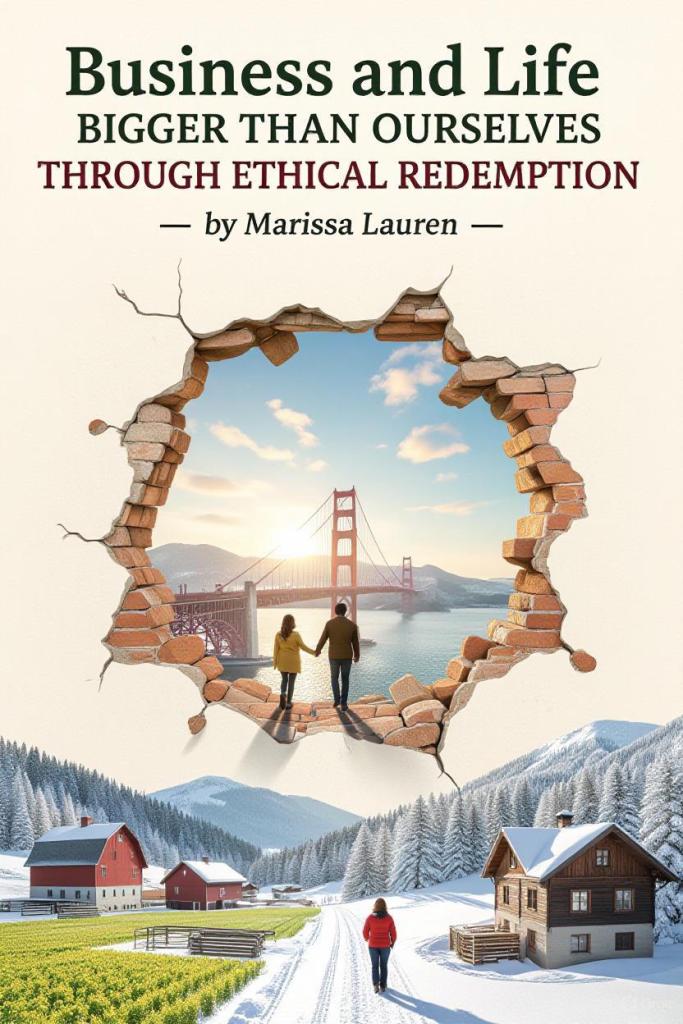
    For too long, I lived with an invisible wall between business and life. As a pastor’s wife and mother of ten, my days were split: family, farm, and ministry on one side; bidding on construction jobs and managing properties on the other. Business was a machine—cold, calculated, and separate from the heartbeats of my personal world. It kept me tethered to my husband’s shadow, my own dreams buried under duty. But eight years ago, a divorce that shattered my family also broke that wall. Through the pain, I found a truth: business and life are not separate. They are one, a unified force for redemption, ethical growth, and unleashing visions that soar beyond ourselves.

    That crucible of divorce wasn’t just loss—it was liberation. Stepping out of my ex-husband’s shadow, I faced a world of division, where punitive mindsets and disconnection tore at the fabric of family and community. I could have stayed in that bitterness, but I chose a different path. “The fight isn’t against people or systems,” I realized. “It’s against division and adversarial mindsets that keep us from connecting and collaborating.” This insight fueled my transformation and birthed Legacy Building & Development LLC, my Pacific Northwest construction company focused on sustainable projects and community impact. More than that, it ignited my mission to help others unleash ideas and visions bigger than themselves—dreams that don’t just build businesses but reshape lives and communities.

    My journey taught me that ethical business is about more than profit—it’s about redemption through collaboration. During my divorce, I faced scarcity and rejection, but I also saw opportunities to rebuild differently. A property I owned, once a potential burden, could become a revenue stream for the winter ski season if approached with partnership over isolation. I told a loved one, “The only thing I can do is live my own life fully and as well as possible,” focusing on creation over resentment. That mindset shift turned my business into a platform for empowerment, not just for me but for others. I began helping clients—entrepreneurs, nonprofits, dreamers—unleash their boldest ideas, from launching coffee shops to scaling community programs, by aligning their visions with ethical, actionable strategies.

    Unleashing visions bigger than ourselves means rejecting punitive thinking. Too often, we see setbacks—lost contracts, fractured partnerships, or personal failures—as punishments to endure. But what if they’re invitations to build together? Ethical business replaces zero-sum games with mutual upliftment: transparent deals, fair financing, and investments in people over profit margins. It’s about saying, “I’ve accumulated resources—what good are they if I can’t help others?” as I reflected in a recent heartfelt conversation. It’s about guiding a nonprofit to secure grants for youth programs or helping a small business owner turn a passion project into a sustainable venture. These acts redeem our pain by fostering unity and purpose.

    Through my Blueprinted frameworkInspire (spark hope in broken places), Dream (envision bold, world-changing ideas), Build (create sustainable foundations), and Align (ensure visions stay true)—I’ve seen this unity transform lives. My divorce gave me the courage to build a company that reflects my values: love over perfection, growth over greed, community over isolation. But it’s not just my story. When I help a client dream beyond their fears—whether it’s a trades training program or a tech startup—I see their eyes light up with possibility. Their vision becomes a beacon, pulling others toward a shared purpose. Every contract, every project, every coaching session is a chance to redeem division by building bridges.

    If you’re trapped in a mindset where business feels separate from life—where your hustle is disconnected from your heart—I challenge you to tear down that wall. Your work is a canvas for redemption, a platform to unleash visions that outgrow you. Stop seeing competitors as enemies or failures as final. Start building ethically: offer a hand to a struggling entrepreneur, share resources with a dreamer, or align your business with a cause bigger than profit. My journey from a shattered family to a thriving entrepreneur and vision-unleasher taught me that when we unify business and life, we don’t just succeed—we redeem, we restore, we inspire greatness in others.

    What’s one vision bigger than yourself that you’re ready to unleash? Subscribe and let’s build it together.

    Stay Blueprinted,
    Marissa Lauren

    (Note: This post is part of the “Fractured Bonds to Business Breakthroughs” series, sharing my journey to inspire yours. Subscribe for more.)

  • Staying on Track: The Aligning Stage Begins

    Welcome to the business aligning stage—the fourth and final step in a four-stage journey (Inspiration, Dreaming, Building, Aligning) to authentic growth! You’ve built a strong foundation for your nonprofit, coffee shop, podcast, or business expansion. Now, it’s time to ensure your venture stays true to your original “why.” This phase is about checking your path and making adjustments—let’s keep your vision alive! It’s important to understand that this aligning state is a long-term game, an ongoing process of continual checking and rechecking to make sure the heart is still behind it and lines up with your original “why.” This is just a brief overview, with more to come later.

    What Does Aligning Mean for You?

    The aligning stage is when you reflect on your journey. Whether it’s your nonprofit’s mission, your coffee shop’s vibe, your podcast’s purpose, or a new branch of your business, this is about ensuring it still feels like you. With Inspiration, Dreaming, and Building behind you, alignment keeps your venture authentic. It’s like tuning an instrument—small tweaks keep the music true to your soul. As you bring on team members to help align and build your dream, remember that no one will have the same passion and vision for it as you do. Very rarely will someone have the capacity and fire to carry it forward like you, so you must continue to monitor and guide it.

    Reflect with Care and Connection

    Take a moment to listen to your instincts and the voices around you. As someone who’s raised ten kids and supported nonprofits, I’ve learned that checking in with your team, customers, or community keeps things on track. Ask, “Does this match my vision?” This compassion—rooted in my love for authentic connections—helps you realign with purpose, not pressure. When you share roles with others, if they don’t carry the same heart or vision—or aren’t pursuing their own dreams that symbiotically attach to yours—it can lead to issues. Let visions that closely align guide adjustments, but always ensure it doesn’t drift too far unless it feels right.

    How to Stay Aligned

    Here’s how to keep your business true, inspired by resilience and a passion for people:

    • Pause and Review: Set aside 10 minutes today to assess. Does your nonprofit still serve its cause? Is your podcast resonating? Bring it back to your original spark if drift appears.
    • Gather Feedback: Ask supporters what they see. My nonprofit talks often reveal alignment needs—seek those insights to put things back in place.
    • Adjust with Flexibility: Tweak what’s off. If your coffee shop’s menu drifts, refine it with resilience. Continual discipline, like child-raising, guides this never-ending process.
    • Reconnect to Your ‘Why’: Revisit your original spark. This keeps your business aligned with your heart, maintaining stamina through pitfalls.

    The Pitfall: Drifting Off Course

    Drift can sneak in—your nonprofit might lose focus, or your podcast could stray from its theme. Sharing with doubters who discourage can also pull you off track, shaking your confidence. Another pitfall is copying or hopping on someone else’s dream or passion that isn’t truly yours, driven by money rather than heart—because you’ll lack the grit and long-term stamina to push through when passion fades. With your foundation set, alignment prevents burnout and loss of steam, employees, or influence. A clear path forward starts with recognizing these risks.

    Lessons for True Alignment

    Raising a big family has taught me resilience—guiding kids to stay true to their dreams. In nonprofits, alignment unites a cause. This phase calls for patience—small adjustments ensure your business reflects your vision through every challenge, like continual guiding in child-raising.

    Your Turn: Align with Purpose

    You’ve built something real—now align it with your heart. Reflect on one area to adjust today, seek feedback, and reconnect to your “why.” I’m passionate about creating spaces—through Blueprinted and beyond—where visions thrive. This is just a brief overview, with more to come later.

  • Time to Build: Making Your Dream Real

    Welcome to the business building stage—the third step in a four-stage journey (Inspiration, Dreaming, Building, Aligning) to authentic growth! Today, is a new day, and you’re ready to turn your well-planned dream into action. Whether it’s a nonprofit, a coffee shop, starting a podcast, or building on another section of your already established business, this is your moment to build. With your Inspiration and Dreaming phases behind you, let’s create a foundation that stands strong!

    What Does Building Mean for You?

    The building stage is when your business idea takes shape in the real world. It’s launching that nonprofit program, opening the coffee shop, recording your first podcast episode, or expanding your existing business—like setting up a website, crafting a prototype, or starting a new product line. With your plan in place, it’s about building well, ensuring every move is solid, because a shaky start can derail your progress. This is your chance to craft a strong business foundation.

    Build with Intention and Care

    Think of this as laying the first brick with purpose. As someone who’s raised ten kids and built ventures from scratch, I’ve learned that listening to your instincts and feedback is key. Ask yourself what feels right for your nonprofit, coffee shop, podcast, or business expansion. Test your ideas with trusted voices—friends, mentors, or community members. This approach, rooted in compassion, helps you build a foundation that reflects your authentic goals.

    How to Build Well

    You’re ready to start—here’s how to lay a foundation that lasts, inspired by practical steps and a love for authentic connections:

    • Take One Step: Start with something simple today—register a domain for your podcast, plan a nonprofit event, or test a coffee shop menu. Keep it manageable.
    • Check for Strength: Test your plan, like leveling a wall before adding more. Gather feedback to ensure stability for your venture.
    • Seek Encouragement: Share with supporters who lift you up. Positive voices fuel a solid start for any nonprofit or business.
    • Adapt as Needed: Be flexible. Adjust your build as you learn—resilience keeps your coffee shop or podcast growing.

    Avoid the Weak Foundation Trap

    Rushing can lead to a wobbly base—think of a house on uneven ground. Another risk is sharing with naysayers who discourage your nonprofit, coffee shop, podcast, or business expansion, shaking your confidence. With your Inspiration and Dreaming in place, you’ve got a plan—now build well by nurturing it with care and avoiding doubt. A strong start sets you up for success.

    Lessons for a Lasting Build

    Raising a big family and supporting nonprofits has shown me that resilience builds strength. Just as kids need a sturdy fort base, your business—whether a podcast or established venture—needs a solid foundation. In nonprofits, a united start creates impact. Take your time—each step matters—to ensure your project thrives.

    Your Turn: Build with Confidence

    You’ve done the prep work—now it’s time to build! Pick one action today for your nonprofit, coffee shop, podcast, or business expansion, test it, and share with those who cheer you on. Creating spaces where dreams grow—through connections like Blueprinted and beyond—is my passion. Let’s see your foundation rise!

  • From Spark to Vision: The Dreaming Phase Begins

    Hi, I’m Marissa, a mom of ten, a serial entrepreneur, and someone who loves sharing my journey through Blueprinted, where I explore ways to help people uncover their authentic business path. After losing everything in 2018 and rebuilding alone, I learned that dreams don’t just happen—they take root with care. The first phase of my four-stage journey (Inspiration, Dreaming, Building, Aligning) is Inspiration, where you catch that initial spark. The second phase is Dreaming, and we’ll talk a little about it here. This is one of the most precious and delicate phases because something is being formed on the inside of your creative mind that hasn’t been seen yet by the outside world. It is vulnerable and new, and easily abandoned if not recognized or cared for. Ready to root your business vision? Let’s dive in.

    What Is the Dreaming Phase?

    The dreaming phase is when you claim your inspiration as your own. It’s no longer just a fleeting thought—it’s a vision you begin to shape. I felt this when I sketched out my organic soap business years ago, wondering how to bring it to life. As a mom, I see it in my kids’ dreams of forts evolving into castle plans. This phase involves planning, asking “What would this look like?” and “What do I need?” It’s the heart of authentic business growth.

    Listening to Shape Your Dream

    My strength comes from listening, a skill sharpened raising ten kids and speaking at public events. In 2018, when I rebuilt from nothing, quiet reflection helped me shape my next steps. I love hearing others’ ideas—noting keywords like “community” or “impact”—and gently pulling those threads until they say, “That’s it!” This phase thrives on compassion, making sure your dream feels understood and supported.

    How to Nurture Your Business Dream

    Here’s how to root your vision, inspired by my work in construction, nonprofits, and loving people authentically:

    • Start Planning: Spend 15 minutes sketching your idea—domain names, resources, or partners. My soap venture began with small market dreams.
    • Define Your ‘Why’: Ask, “Why does this matter to me?” My passion for nonprofits often shapes my visions, like supporting community causes. What drives yours?
    • Talk It Out: Share with a listener. My nonprofit talks spark others’ dreams—find someone to reflect your vision back.
    • Embrace Flexibility: Dreams evolve. After 2018, I adapted with resilience. Let your vision shift as you grow.

    The Pitfall: Where Dreams Stall

    Many dreams fade in this phase due to self-doubt or lack of structure. As a mom, I’ve seen kids abandon castle plans without support. Another reason dreams die is when people share them with others who don’t encourage or validate them—those around them might dismiss the idea, leading to even more doubt. I’ve felt this hesitation myself. Through Blueprinted, I’ve found joy in offering a space where dreams are nurtured, not judged.

    Motherhood and Nonprofit Lessons: Resilience Fuels Dreams

    Raising kids through extreme chaos and rebuilding alone since 2018 taught me resilience. When my kids dream big, I ask questions to keep them going, even if others doubt. In nonprofits, I’ve seen how a shared “why” unites people despite skepticism. This phase is about rooting your dream with strength, ensuring it withstands life’s challenges.

    Your Turn: Root Your Vision

    Your business dream is ready to take shape. Reflect: What’s one idea you’d love to grow? Jot it down, define its “why,” and share it with someone who lifts you up. I’m passionate about creating spaces—through Blueprinted and beyond—where dreams find room to flourish.

    Call to Action: Share your dream in the comments, or reach out to start a conversation about rooting your vision. Let’s build something authentic together!