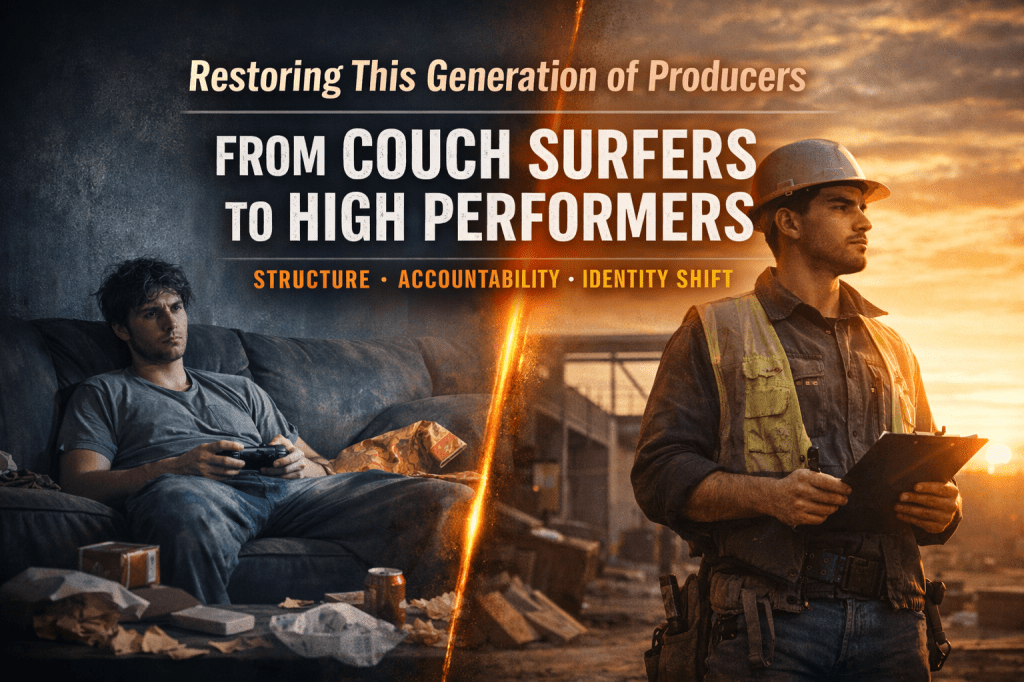
There’s a version of someone that people write off way too fast. The one sleeping in late, bouncing between jobs, inconsistent, distracted, no direction. It’s easy to label them. Lazy. Unreliable. Not leadership material. But that’s not actually what’s going on. Most people are not broken, they’re unstructured.
People don’t just rise into discipline or leadership because they feel like it. They rise when their environment requires it. Right now, a lot of people are living in environments that require almost nothing from them. No real expectations, no accountability, no pressure to grow, no real consequences for staying the same. So they stay the same. Or they drift. And after enough time, that drift turns into identity. They start believing things like “I’m just not disciplined” or “I’m not a leader” or “I can’t stay consistent.” That’s not truth, that’s repetition.
Real change doesn’t come from motivation. It comes from structure, accountability, and an identity shift working together.
Structure is what most people are missing. It’s the container that forces movement. Without it, people default to comfort every single time. With it, they don’t have that option. Early mornings, clear expectations, defined roles, time pressure. Structure doesn’t ask someone how they feel, it moves them anyway. And over time, that movement starts to build something.
Accountability is what closes the gap between what someone says they want and how they actually live. Most people have good intentions. Very few follow through consistently without someone holding the line. Not in a harsh way, but in a steady, consistent way. Someone who sees them clearly, calls them higher, and doesn’t let them quietly fall back into old patterns. That consistency matters more than motivation ever will.
Then there’s identity. This is where everything locks in. At some point, it stops being “I’m trying to be disciplined” and becomes “I am disciplined.” That shift doesn’t happen because someone says it out loud. It happens because they’ve lived it enough times to believe it. They’ve done hard things, pushed past limits, faced their own excuses, and proved something to themselves. The brain starts updating the story. And once that story changes, everything else follows.
I’ve seen this play out over and over again. Young people coming in with no direction, no consistency, no belief in themselves. Some of them drifting, some of them struggling, some already written off by the people around them. And then you put them in a different environment. Not an easy one, a structured one. You hold them accountable. You push them past the point where their old identity can survive. And something shifts. Not overnight, but clearly. Confidence starts showing up without being forced. Discipline doesn’t need reminders. Leadership starts to come out naturally. Not because someone told them who they were, but because they proved it to themselves.
This is where most systems miss it. They try to inspire people. They try to motivate them. But inspiration doesn’t last. It feels good for a moment, then it fades. Real transformation requires pressure, consistency, and environments where excuses don’t hold up. That’s the difference.
This isn’t just about personal growth, this is about restoring a generation of producers. People who don’t just consume, but actually build. People who take ownership of their life, their work, and their future. Businesses are looking for people who are reliable, consistent, capable under pressure, and able to lead. But those traits don’t just show up. They have to be built. If we don’t build them intentionally, we’re going to keep seeing the same cycle. Frustrated employers, underdeveloped employees, and a lot of missed potential on both sides.
The person you see today is not their final form. With the right structure, the right accountability, and the right environment, people change. Not a little, dramatically. The real question isn’t whether people are capable. It’s whether we’re willing to create environments that actually require them to be.
 Marissa Lauren
Leave a comment